Oracle
Unified Surface: Swap, Bridge, and Send from One Window

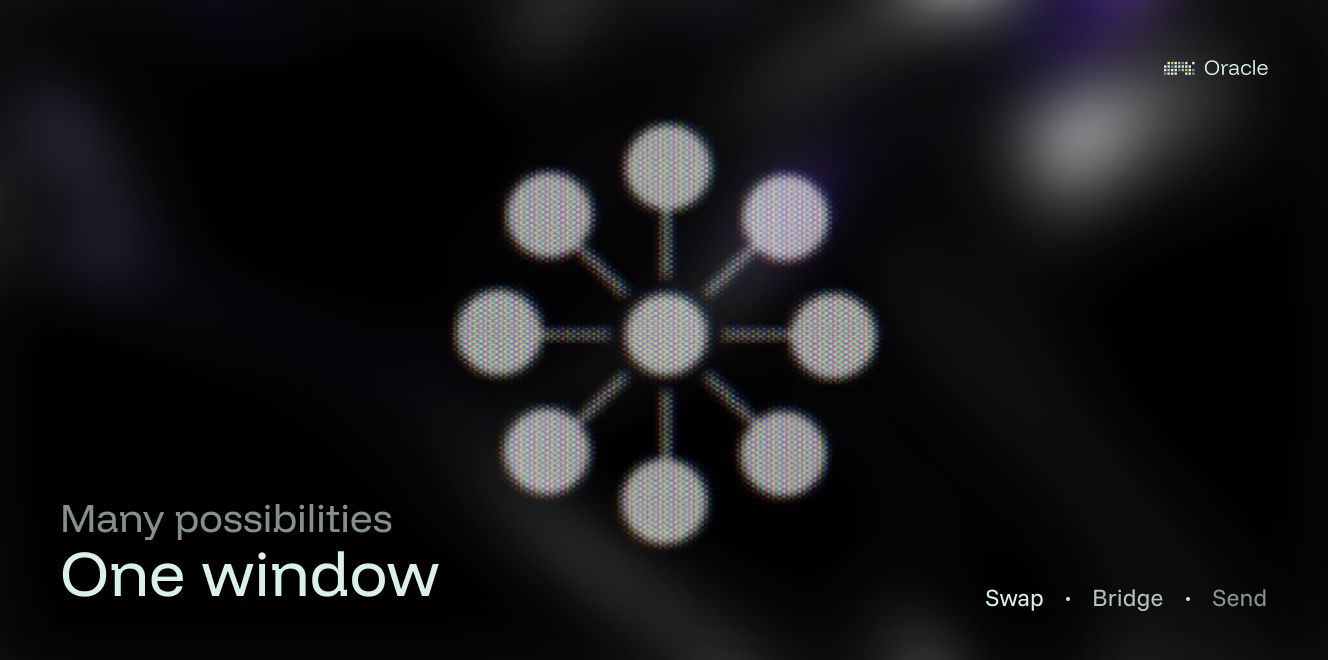
Move value across chains without ever switching tabs. Oracle’s unified surface lets you swap, bridge, and send assets in one seamless flow — one quote, one confirmation, done. No fractured dashboards or juggling multiple dApps. Just connect your wallet, pick tokens and chains, and let Oracle handle the route.
When we built Oracle, our goal was clear: create a single, composable interface that lets users perform any crypto move—swap, bridge, or send—without breaking focus. In the multichain world, that means blending speed, clarity, and smart routing under one surface. Here’s how we made that possible.
1. One Window for Every Move
Most dApps split these actions across separate tools. You swap on one, bridge on another, and send from a third. Oracle collapses all three into a single pane powered by Relay Protocol. It’s the same window, same quote engine, same signing flow. You pick tokens and chains, Oracle finds a route through Relay’s relayer network, and your funds appear where you need them — fast. The relayer fills on the destination chain using its own liquidity, then settles efficiently in the background.
The result: near-instant fills and minimal gas, typically around 42k gas per transfer versus 250k+ in conventional bridges.
2. Powered by Relay: Cross-Chain Execution Without the Wait
Under the hood, Oracle’s unified window runs on Relay’s multichain settlement architecture. Instead of locking funds and waiting for validators, a relayer completes the swap on the destination chain using its own capital. Validation and settlement happen later on a low-cost chain, meaning users only experience the fast part — the final result.
This design turns multichain transfers into single-step confirmations. It’s secure, predictable, and dramatically faster than traditional bridging.
3. Wallet Control via Privy
A seamless interface needs seamless wallet logic. With Privy, you can connect multiple wallets and switch on the fly — your first wallet handles authentication and requests; others execute transactions. Whether you use a self-custodied wallet like Coinbase or an embedded Privy wallet, Oracle ensures every interaction feels local: no pop-ups, no redirects, no disconnected sessions.
4. Built for Flow, Not Friction
Every element of Oracle’s swap window is tuned for real use:
- Auto-chain detection for your connected wallet.
- Slippage & speed controls before confirmation.
- Explorer links for transparency after each transaction.
- Saved preferences so you always start from where you left off.
Combined, these make Oracle feel less like a dApp and more like a native payment interface — one you can trust to simply work.
Why This Matters
Unified surfaces change how users experience DeFi. By removing context switches and merging swaps, bridges, and sends into a single action surface, Oracle reduces cognitive load and execution time. For power users, that means faster liquidity routing. For newcomers, it means fewer mistakes and clearer feedback.
Oracle’s approach—powered by Relay, Privy, and Base—sets a new standard for multichain usability: a composable surface where speed, safety, and simplicity converge.
No tabs. No confusion. Just one quote, one confirmation, done.
Oracle
More to Explore
Keep the flow going — explore more stories that shape the Oracle ecosystem and the tech behind it.

Transparency & Safety
Non-custodial by design, clear fees, full visibility.
Social Feed
See what your network is swapping — verified, on-chain, and live.
Cross-Chain Routing
Orders filled instantly by relayers, settled cheaply after.